
Understanding Common Pipe Materials for Homeowners

Most people take their home’s pipes for granted and only think about them when something goes wrong. But did you know that copper pipes can last up to 70 years, while PVC alternatives may only last about 40 years ? This huge difference means your choice of pipe material could be a quiet hero or a hidden headache for decades—sometimes in ways you’d never expect.
Table of Contents
- What Are Common Pipe Materials?: A Look At Options
- Why Pipe Material Choices Matter For Your Home
- How Different Pipe Materials Work In Plumbing Systems
- Key Concepts In Understanding Pipe Material Durability
Quick Summary
| Takeaway | Explanation |
|---|---|
| Choose pipe materials wisely | Select pipe materials based on durability, cost, and application needs. Consider long-term performance implications. |
| Prioritize water safety | Avoid older pipes that may leach contaminants; modern materials can enhance water quality and safety. |
| Evaluate durability factors | Assess lifespan, corrosion resistance, and installation needs to ensure reliable plumbing performance over time. |
| Consider initial and future costs | Compare upfront investments against long-term maintenance and repair expenses for each pipe type. |
| Understand interaction with water | Know how each material responds to water flow, temperature fluctuations, and environmental conditions to ensure optimal use. |
What are Common Pipe Materials?: A Look at Options
Pipes are fundamental components of any residential plumbing system. Selecting the right pipe material involves understanding their unique characteristics, performance, and suitability for different applications. Homeowners often face challenges in determining which pipe materials will best serve their specific needs.
Types of Pipe Materials
The plumbing world offers several common pipe materials, each with distinct properties and recommended uses. Understanding these options helps homeowners make informed decisions about their home’s infrastructure.
-
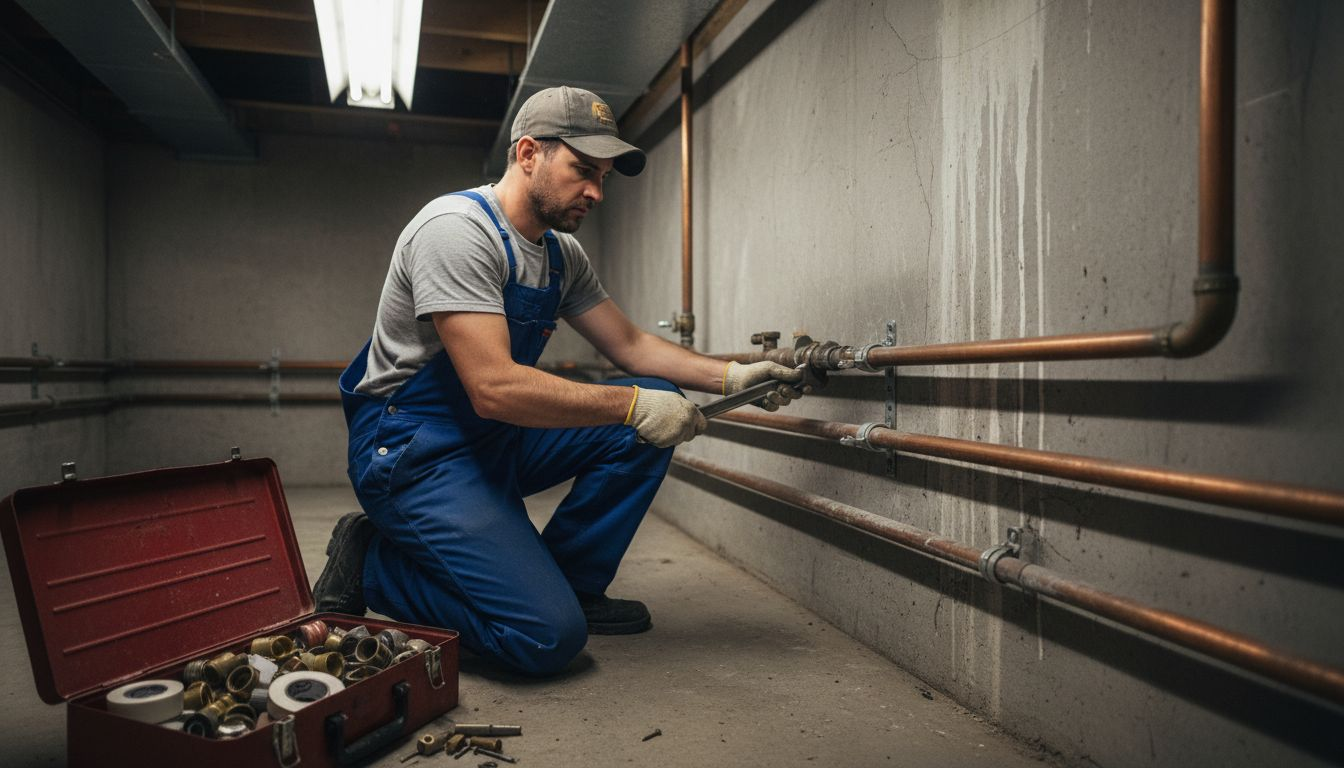
Copper Pipes : Traditionally used in residential plumbing, copper pipes are known for their durability and corrosion resistance. Read more about copper pipe maintenance to ensure long term performance.
-
PVC (Polyvinyl Chloride) Pipes : Lightweight and cost effective, PVC pipes are commonly used for drainage and waste management systems. They resist chemical corrosion and are relatively easy to install.
-
PEX (Cross-linked Polyethylene) Pipes : Flexible and resistant to temperature changes, PEX pipes are increasingly popular for water supply lines. They can bend around corners and require fewer connections compared to rigid piping.
Considerations for Pipe Material Selection
Choosing the right pipe material depends on several critical factors:
- Water temperature and pressure requirements
- Local building code regulations
- Budget constraints
- Specific plumbing system needs
- Environmental conditions and potential exposure
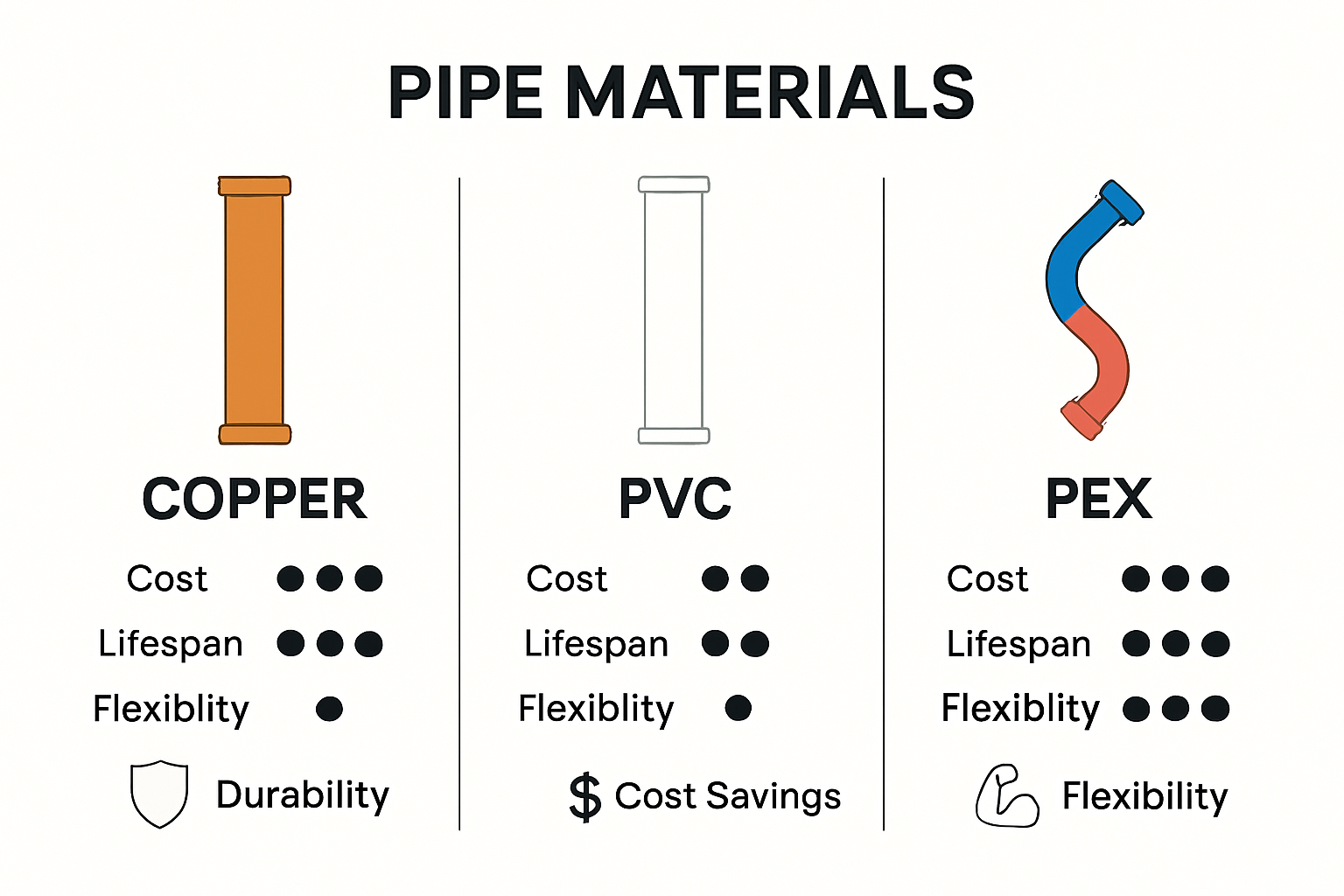
Each pipe material presents unique advantages and potential limitations. Copper offers excellent longevity but comes at a higher cost. PVC provides affordability and chemical resistance. PEX delivers flexibility and ease of installation. Homeowners must carefully evaluate their specific requirements to select the most appropriate pipe material for their residential plumbing system.
Below is a comparison table summarizing the key characteristics, strengths, and typical uses of common pipe materials mentioned in this article.
| Pipe Material | Typical Lifespan | Key Advantages | Potential Limitations | Common Residential Uses |
|---|---|---|---|---|
| Copper | 50-70 years | Highly durable, corrosion-resistant, maintains water quality | Higher cost, rigid installation | Water supply lines |
| PVC | 25-40 years | Lightweight, cost-effective, resists chemical corrosion | Not suitable for hot water, can be brittle | Drainage, waste, venting |
| PEX | 40-50 years | Flexible, temperature-resistant, fewer connections | Sensitive to UV exposure, newer technology | Water supply lines |
| Galvanized Steel | 40-50 years | Strong, historically used | Prone to corrosion, mineral buildup, contaminant leaching | Older homes (water supply) |
| Lead (obsolete) | 100+ years (but unsafe) | Malleable for shaping | Toxic, leaches contaminants—no longer used in new installations | Very old homes (should replace) |
Why Pipe Material Choices Matter for Your Home
The pipe materials you select for your home represent far more than simple construction components. They directly impact your property’s structural integrity, water quality, long term maintenance costs, and overall living environment. Understanding the profound implications of pipe material selection can help homeowners make informed decisions that protect their investment.
Health and Safety Implications
Pipe materials play a critical role in maintaining water safety and preventing potential health risks. Older homes might have lead or galvanized steel pipes that can leach harmful contaminants into drinking water. Learn about potential plumbing renovation risks before attempting any independent modifications.
Certain pipe materials demonstrate superior resistance to:
- Bacterial growth
- Chemical contamination
- Corrosion and degradation
- Temperature fluctuations
- Mineral buildup
Economic and Performance Considerations
The financial impact of pipe material selection extends beyond initial installation costs. Different materials offer varying lifespans, maintenance requirements, and performance characteristics that influence long term expenses.
- Copper Pipes : Higher upfront cost but excellent durability
- PVC Pipes : Lower initial investment with moderate lifespan
- PEX Pipes : Moderate cost with superior flexibility
Homeowners must balance immediate budgetary constraints with potential future repair and replacement expenses.
 Selecting high quality pipe materials can prevent costly water damage, reduce maintenance frequency, and enhance overall home infrastructure reliability.
By carefully evaluating pipe material characteristics, potential environmental interactions, and specific residential requirements, homeowners can make strategic choices that safeguard their property’s plumbing system for years to come.
How Different Pipe Materials Work in Plumbing Systems
Plumbing systems represent complex networks where different pipe materials interact with water, environmental conditions, and structural requirements. Understanding how these materials function helps homeowners appreciate the intricate design behind modern residential plumbing infrastructure. Learn about comprehensive waterproofing strategies to complement your pipe material knowledge.
Material Interaction with Water Flow
Each pipe material responds uniquely to water transportation based on its inherent physical and chemical properties. Copper pipes , for instance, naturally resist bacterial growth and maintain water quality through their metallic composition. PVC pipes offer smooth interior surfaces that minimize friction and optimize water flow, reducing potential pressure loss.
Key performance characteristics include:
- Smooth interior surface area
- Friction coefficient
- Water pressure handling capacity
- Temperature resistance
- Mineral deposit prevention
Thermal and Chemical Resilience
Pipe materials must withstand diverse environmental challenges beyond simple water transportation. PEX pipes demonstrate exceptional flexibility, expanding and contracting without compromising structural integrity during temperature fluctuations. Galvanized steel pipes , conversely, are prone to corrosion and mineral buildup, which can significantly impair water quality and flow efficiency.
Critical factors affecting pipe material performance:
- Ambient temperature range
- Chemical exposure potential
- Mineral composition of local water supply
- Potential soil interaction
- Structural load requirements
By comprehending how different pipe materials interact with water systems, homeowners can make informed decisions about their residential plumbing infrastructure. Each material brings unique strengths and potential limitations, requiring careful consideration of specific environmental and usage conditions.
Key Concepts in Understanding Pipe Material Durability
Durability represents a critical consideration for homeowners when selecting pipe materials. It encompasses more than simply how long a pipe might last, but includes its ability to withstand environmental stressors, maintain structural integrity, and preserve water quality over time. Explore our comprehensive renovation planning guide to understand how pipe durability impacts overall home infrastructure.
Factors Influencing Pipe Material Longevity
Pipe durability depends on multiple interconnected factors that determine a material’s resistance to degradation. External environmental conditions, internal water chemistry, installation quality, and maintenance practices all contribute to a pipe’s overall performance and lifespan.
Key durability determinants include:
- Corrosion resistance
- Structural load tolerance
- Chemical interaction potential
- Temperature flexibility
- Mechanical stress absorption
Comparative Durability Characteristics
Different pipe materials exhibit unique durability profiles. Copper pipes typically demonstrate 50-70 year lifespans under optimal conditions, while PVC pipes can maintain functionality for 25-40 years. PEX pipes represent a newer technology with promising durability, potentially lasting 40-50 years with proper installation and maintenance.
Critical durability assessment criteria:
- Material composition
- Manufacturing quality standards
- Protective coating effectiveness
- Resistance to mechanical deformation
- Performance under varying environmental conditions
Understanding pipe material durability requires a holistic approach that considers multiple performance metrics. Homeowners must evaluate not just initial cost, but long term reliability, potential maintenance requirements, and the specific environmental challenges their plumbing system will encounter.
The following table outlines major factors that influence pipe material durability, helping homeowners compare the different considerations and performance aspects discussed in the article.
| Durability Factor | Explanation | Pipe Materials Most Affected |
|---|---|---|
| Corrosion Resistance | Ability to withstand deterioration due to water/soil | Galvanized Steel, Copper |
| Chemical Interaction | Response to chemical exposure from water or environment | PVC, Copper, Galvanized Steel |
| Temperature Flexibility | Tolerance to thermal expansion/contraction | PEX, Copper |
| Structural Load Tolerance | Strength under physical or environmental load | Copper, Galvanized Steel |
| Maintenance Requirements | Frequency and complexity of repairs or upkeep | All (varies by installation) |
| Protective Coatings | Quality and durability of applied layers | Galvanized Steel, Copper |
| By selecting materials that demonstrate superior durability, residents can minimize potential future repair expenses and ensure consistent, reliable water infrastructure. |
Ready to Protect Your Home with the Right Plumbing Materials?
Choosing the safest and most durable pipes is a big decision for homeowners. You want long-lasting performance, water quality, and peace of mind, but factors like material quality, code compliance, and future-proofing can feel overwhelming. The article above highlights how choosing from options like copper, PVC, or PEX directly affects health, comfort, and expenses. Your home’s plumbing is too important to leave to chance. If you have old pipes or are unsure about your system’s durability, now is the time to act.
Trust the licensed pros at DrainWorks Plumbing, proudly serving Toronto homeowners for over 30 years. Our team can inspect your plumbing, assess your current pipe materials, and recommend the best solution to fit your needs and budget. Get straightforward advice and expert repairs when you need them. For guidance on pipe upgrades, leak repairs, or main water service improvements, book your consultation today. Let us protect your home’s water safety and reliability with proven, responsible service. Secure your property for years to come—reach out to the team Toronto trusts.
Frequently Asked Questions
What are the advantages of using copper pipes in plumbing?
Copper pipes are known for their durability, corrosion resistance, and ability to maintain high water quality. They have a long lifespan of 50-70 years under optimal conditions and are resistant to bacterial growth, making them a reliable choice for water supply lines.
How does PVC compare to PEX for residential plumbing?
PVC pipes are lightweight and cost-effective, making them suitable for drainage systems. In contrast, PEX pipes are flexible and resistant to temperature changes, making them ideal for water supply lines. PEX requires fewer connections, which can reduce potential leak points.
What factors should I consider when selecting a pipe material?
When choosing a pipe material, consider water temperature and pressure requirements, local building codes, your budget, specific plumbing needs, and environmental conditions. Each material has unique characteristics that affect its performance and suitability for different applications.
How does pipe material selection affect water safety in my home?
Certain pipe materials can leach contaminants into drinking water. For instance, older homes may have lead or galvanized steel pipes that pose health risks. Using modern materials such as copper, PVC, or PEX can help ensure better water safety and prevent potential health issues.
Recommended